
How do you know an HVAC system has crossed the line where repairs stop making sense? In Kansas City, MO, the warning signs usually show up together: a compressor pulling more amps every summer, a heat exchanger flagged during the last inspection, repeated refrigerant top-offs on an R-22 or early R-410A system, and utility bills rising while comfort drops. Our test is straightforward. If a repair costs a meaningful share of a replacement and the equipment is past twelve to fifteen years, the fix is likely to buy months rather than years, and the money goes into technology a generation behind today's SEER2 and AFUE standards.
Our two most requested repairs are AC Repair and Furnace Repair. Start there if your system isn't running right.
Warning Signs for HVAC Replacement
Catching these issues early helps you avoid costly problems. Here are the most common indicators that it's time to call a professional:
- Comfort complaints the old system never resolves: hot rooms, cold floors, sticky air
- An aging system, twelve to fifteen years or more, with problems piling up
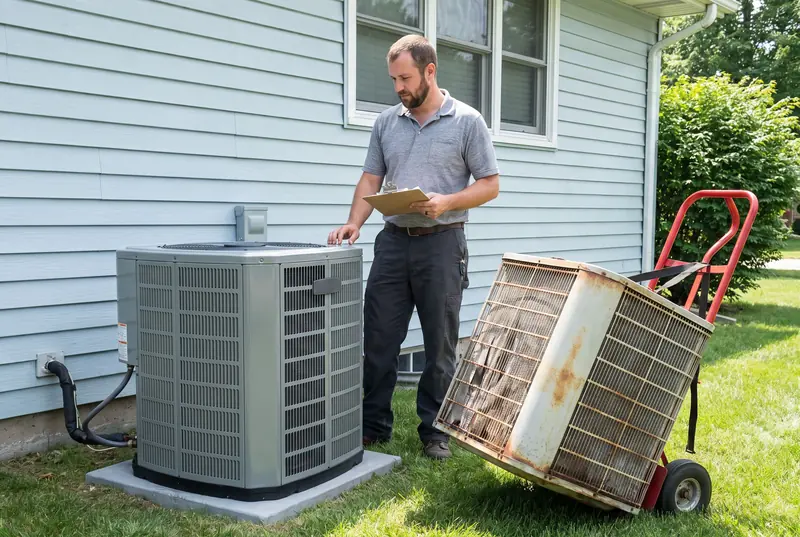
- Visible rust, soot, or corrosion spreading on the cabinet or coils
- Refrigerant leaks that need recharging too often, or an R-22 system
- A failed compressor or cracked heat exchanger, the repairs that tip the decision
- Higher energy bills year after year with no obvious explanation
- A system so noisy you hear every start and stop
- Service calls getting more frequent and more expensive
Early Action Saves Money
Most HVAC failures start small, a weak capacitor, a squealing blower, a system that runs a little longer each week. If you notice any of these signs, call (816) 207-2631 for a prompt inspection.